PROFESSIONAL PROFILE
Advocate Javed Ahmad — Court Marriage Lawyer in Delhi
Advocate Javed Ahmad is enrolled with the Bar Council of Delhi under Enrolment No. D/2417/2007 and has been practising since 2007. His office is at Chamber No. D-522(B), Fifth Floor, Karkardooma Court, Shahdara, Delhi – 110032. The professional focus reflected on this website is court marriage and marriage-law work, including proceedings under the Special Marriage Act, marriage registration, interfaith and inter-caste marriage matters, couple-protection proceedings and related family-law issues.
The purpose of this professional profile is not to promise an automatic certificate, an instant court order or a predetermined result. A responsible legal practice begins with the facts: the age and identity of the parties, their residence, marital status, applicable law, documentary record, proposed authority and any unusual circumstances. The legal route is then selected and the file is prepared accordingly.
What “Court Marriage” Means in Delhi
The expression “court marriage” is commonly used for several different legal situations. In one case, a couple may intend to solemnize a marriage directly under the Special Marriage Act, 1954. In another, the couple may already have solemnized a marriage through a religious ceremony and may now require registration or an official certificate. An interfaith couple may be considering the Special Marriage Act because it provides a secular statutory route without making religious conversion a condition of the statutory marriage. A couple may also be searching for protection because family members or other persons are threatening to interfere with their relationship.
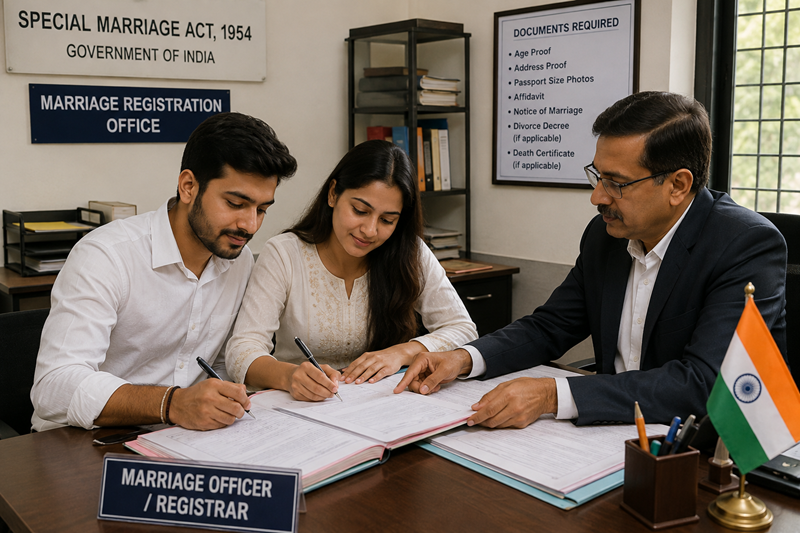
These situations should not be treated as identical. The Special Marriage Act contains a defined statutory procedure involving the Marriage Officer, notice of intended marriage, publication and the opportunity for objections, followed by the statutory declaration, solemnization and certificate where the legal conditions are satisfied. The official India Code text lists these stages in Sections 4 to 13. The practical timeline therefore depends on the route and the competent authority rather than on a generic promise of “same-day court marriage”.
A useful consultation should identify the exact legal objective before documents are prepared. Is the couple asking for solemnization? Is the marriage already solemnized and registration is required? Is one party an NRI or foreign national? Is there a previous marriage or divorce? Is the couple facing an immediate threat? Is there an objection or deficiency from an authority? Each answer can change the legal strategy.
Special Marriage Act: Why Proper Preparation Matters
The Special Marriage Act, 1954 is a central statute providing a special form of marriage and also provisions for registration of certain marriages celebrated in other forms. Section 4 sets statutory conditions relating to the parties, while Section 5 deals with notice of intended marriage. Sections 6 and 7 address the Marriage Notice Book, publication and objections. Sections 11, 12 and 13 deal with declaration, solemnization and the certificate. This statutory sequence is important because it explains why a normal SMA marriage cannot responsibly be advertised as an instant certificate transaction.
Document preparation is equally important. Names and dates of birth should be consistent across documents. Residence evidence should be examined in the context of the statutory jurisdictional requirement. The parties should be ready with the documents and photographs required by the concerned authority, and witnesses should be planned in advance. Where a document has been issued outside India, additional verification or authentication issues may arise. Where a previous marriage exists, the legal status of that marriage must be established before a new marriage is attempted.
Professional assistance is most useful when it reduces uncertainty rather than when it creates unrealistic certainty. The objective is to identify the correct statutory route, prepare the file, anticipate ordinary procedural questions and deal with genuine legal complications through lawful remedies.
Interfaith and Inter-Caste Marriage: Rights, Procedure and Safety
Interfaith and inter-caste couples often face two separate questions: the legal route for the marriage and the response to any threat or interference. The first is primarily a statutory and documentary question. The second can become a constitutional and public-law issue requiring representations to police authorities or, in appropriate cases, judicial intervention.
The Supreme Court has repeatedly recognised the importance of personal autonomy in choosing a life partner. In Shafin Jahan v. Asokan K.M., the Court discussed the individual's autonomy in choosing a partner. In Shakti Vahini v. Union of India, the Court issued directions concerning prevention of honour-based violence and mechanisms for dealing with threats to couples. These decisions are important legal background, but they do not mean that every couple automatically receives a particular form of protection. The facts, evidence and circumstances of the case remain central.
Where a genuine threat exists, a couple should preserve relevant evidence, maintain copies of identity and marriage documents, record earlier complaints where applicable, and obtain case-specific advice promptly. A protection petition should present the facts accurately and identify the relief required. The objective is lawful protection of life and liberty, not exaggeration of a dispute.
Marriage Registration: Certificate, Record and Legal Proof
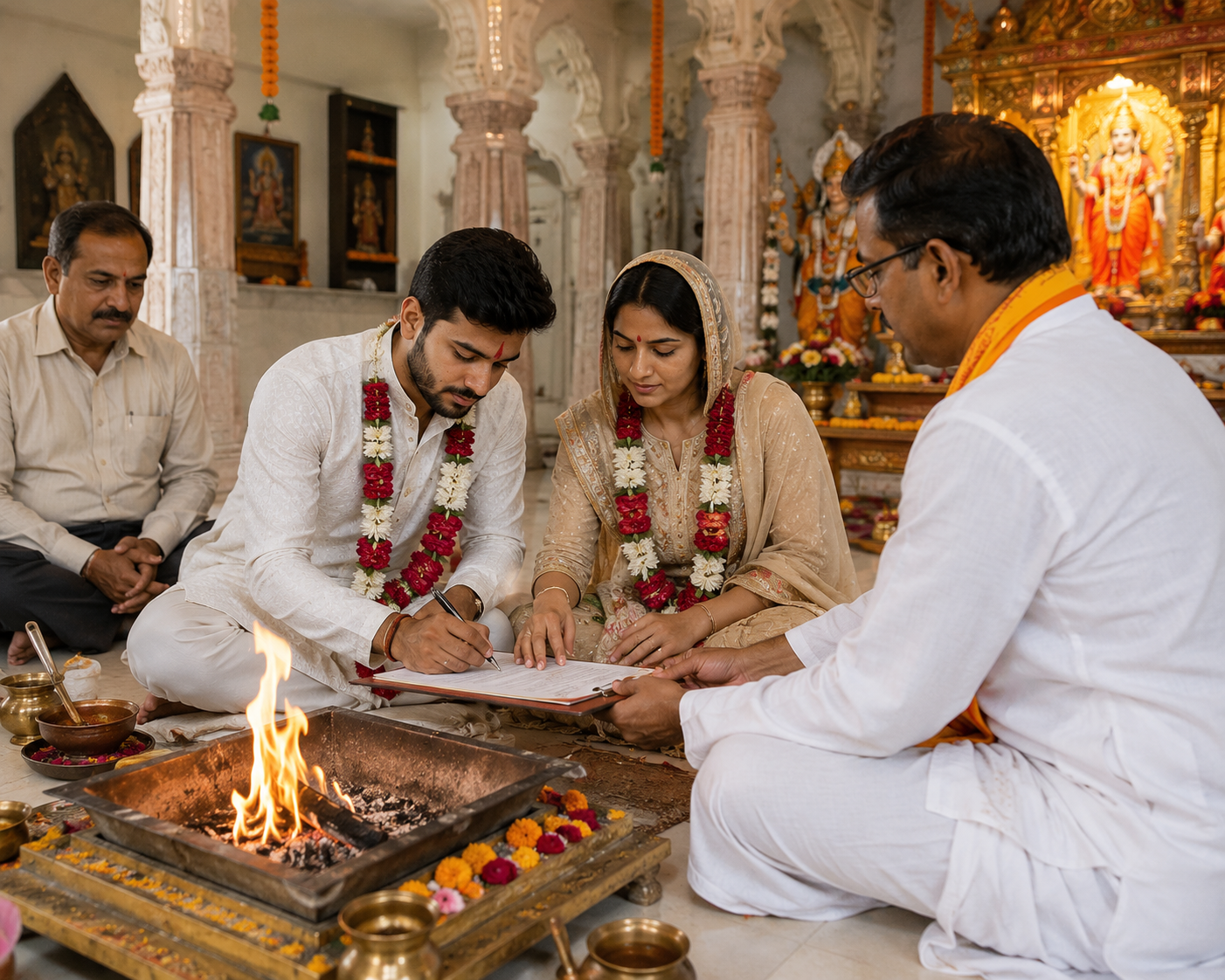
Registration is often treated as a simple formality, but the correct legal process depends upon the manner in which the marriage was solemnized. For example, Section 8 of the Hindu Marriage Act, 1955 concerns registration of Hindu marriages and facilitates proof of the marriage. The Special Marriage Act contains its own provisions for registration of marriages celebrated in other forms. The legal question is therefore not simply “How do I get a certificate?” but “Which statutory registration route applies to the marriage I actually have?”
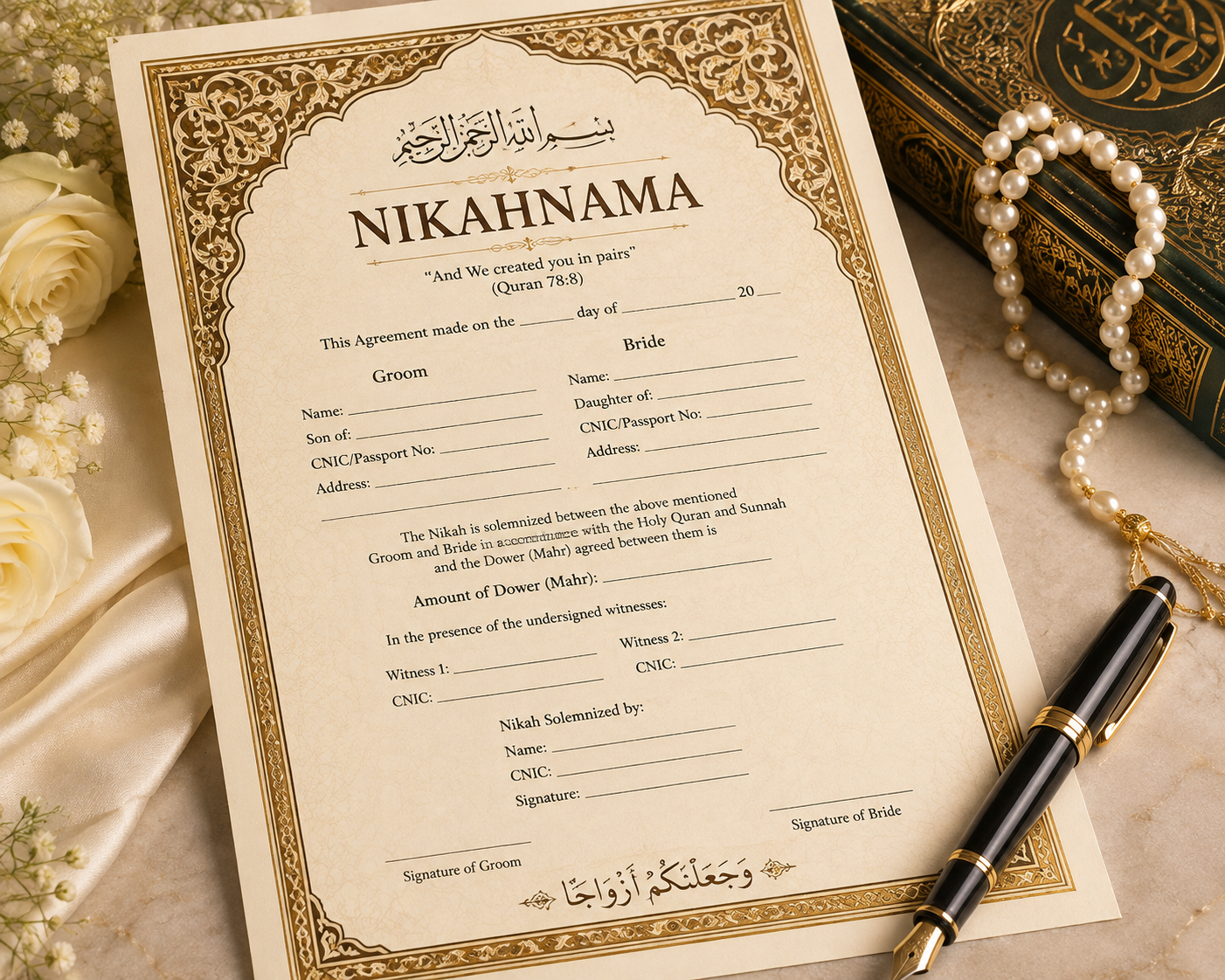
A registration file should contain a coherent documentary record. Identity documents, age proof, residence evidence, photographs, marriage ceremony evidence, witness information, affidavits and any previous marriage or divorce documents should tell the same factual story. Where names differ between documents, the difference should be examined rather than ignored. Where a marriage certificate from a religious institution is available, its role should be understood in relation to the statutory registration process.
This distinction is particularly important for couples who later need the marriage record for passports, immigration, bank or property matters, insurance, employment records, succession-related issues or matrimonial litigation. A carefully prepared certificate file can reduce later disputes about the date, parties and manner of marriage.
Common Questions Couples Should Ask Before Filing
Which law applies?
Determine whether the proposed matter is under the Special Marriage Act, Hindu Marriage Act, a registration provision applicable to an existing marriage, or another legally appropriate route.
Where should we apply?
Jurisdiction should be checked from the applicable statute, rules and the residence or other legally relevant connection with the Marriage Officer or registering authority.
Are both parties legally free to marry?
Previous marriage, divorce, death of a spouse, age and prohibited-relationship questions should be examined before filing declarations.
Are the documents consistent?
Names, dates of birth, addresses and photographs should be checked together. Foreign documents may require additional formalities.
Are witnesses ready?
Where the applicable process requires witnesses, their availability and identity documents should be planned before the scheduled appearance.
Is there a safety issue?
If the couple faces threats, unlawful confinement or serious interference, protection should be treated as a separate urgent legal issue.
Why a Document-First Legal Approach Is Better
A sophisticated marriage-law practice is not limited to telling a couple which form to fill. It begins with a document-first review. This means checking the facts before selecting the form, checking jurisdiction before scheduling an appearance, checking the previous marital history before making a declaration, and checking the exact legal objective before promising a timeline.
This approach is particularly useful in complicated matters involving NRI or foreign-national parties, prior divorce, different spellings of names, address changes, interfaith relationships, conversion questions, objections, registration after a religious ceremony or an urgent protection concern. It also helps couples understand which part of the process is controlled by the advocate and which part is ultimately decided by the Marriage Officer, registrar, police authority or court.
The website's detailed guides are therefore designed to educate first and invite consultation second. A couple should be able to understand the basic legal framework before deciding whether professional assistance is required.
Primary legal references
The principal statutory references discussed on this website include the Special Marriage Act, 1954 and the Hindu Marriage Act, 1955, as published on India Code. Constitutional and protection discussions draw on Supreme Court decisions including Shafin Jahan v. Asokan K.M. and Shakti Vahini v. Union of India. Laws, rules, administrative practices and judicial decisions can change, so case-specific advice should be based on the current legal position and the actual documents.